Sunday, November 08, 2009

"Phuling her?"


SA PAGRULUWASAN KAN KADAKOL na mga endorsement kan 'pambansang kamao' na si Manny Pacquiao, kadakol akong nagkakadarangog na reaksiyon kun tano subuot si Pacquiao an piniling endorser kan mga kapitalistang an natura kan produkto enot nang sulnupanon. Kadakol sa mga nagkokorokonyohan na mga paradalan sa telebisyon an napapangirit asin labi-labi an pagtuyaw sa mga komersyal kan boksingero. Sa mga kahobenan, punto an mga komersyal ni Pacquiao nin mga pag-arog-arog na may katuyuhan na magpangirit. Alagad sa karaskasan na paghiling, ano man nanggad an remalaso?

Si Manny Pacquiao an sarong klasiko asin awtentikong ehemplo nin sarong indibidwal na uminulanto gikan sa pagtios pasiring sa pagiging multi-millionaire, sarong bagay na dai nanggad manenegaran nin siisay man na nagsusubaybay sa saiyang buhay. Huli kaini, natatada pa sa satong suru-suró an pagkangalas na nagtutulod sa pagkuwestiyon sa pagigin lehitimo ni Pacquiao para sa mga penomenon na arog kan komersyal sa telebisyon. Kaagid ini kan kaisipan na an maninigo sanang magin artista, anchor newscaster, product endorser o ano pa man na trabahong nangangaipo nin exposure sa atubangan kan kamera iyo idtong magayon, guwapo, maputi, maorag magtaram, maskulado, o ano pa man na superyor na karakter na kun susumahon garo ladawan nin pagigin bakong Filipino. Nakakapangirít ini huli ta an mga dayuhan logod labi-labi man an pagmawot na mahàbon an kolor kan satong kublit.

Sa kaso ni Pacquiao, nginingiritan ta an saiyang pagtaram. Ini-spoof na ini ni Pooh asin ginibong parte nin tagline sa billboard kan GMA 7-"I'm a Kapuso, you know"-mga gibong orog pang nagpalataw na garo baga lain o kakaiba an siring na mga bagay. Romdomon ta na sa mga komersyal kaidto igwa na katabang na Inday an pangaran asin Dudung an apod niya sa lalaking napupusuan. Kun siring, hinihiling kaini an pagkakaiba sa tataramon. Igwa akong honà na an may koneksiyon ini sa katotoohan na an sentro kan advertising sa Filipinas iyo an Manila kun sain an tataramon Tagalog asin bakong Bisaya. Siring man na nginingiritan ta si Pacquiao sa saiyang pagtaram huli ta kita mga Bikolano, mga tawong mahalnas an tataramon kun ponema asin ponetika an pag-uurulayan, asin huli man kaini, bakong matagas an satong pagtaram nin ibang lenggwahe.

Sa linggwistika, masuwerte kita huli ta kaya tang itaram an anuman na lenggwahe sa bilog na kinaban. (Bako daw ini sarong rason kun tano ta nakabalangibog sa bilog na kinaban an mga Filipino?) An mga korong Filipino na nakikilaban sa mga kompetisyon sa ibang nasyon pirming mga ganador asin labi-labing nginangalasan. Sarong factor kaini an satuyang dila. Kun an mga Tsino o Vietnamese piriripit an dila pag mina-Ingles, bako ta ining problema, ta kaya kan dila tang mag-Ingles, mag-Ingles na Pinoy na nagtataram Ingles, o mag-Ingles na garo Ingles na nagtataram Filipino. Sa totoo lang, kaya tang magtaram nin Hapón o Ruso, asin kaya ta man arogon an sarong Hapón na nagru-Ruso asin an Ruso na nagha-Hapón. Abang orag!

Ini an sarong bagay na pinasâ ni Pacquiao: sa totoo lang, orog niyang itinaas an dilang Bisaya na minataram nin ibang lenggwahe sa antas na ini maninigo man palan gamiton sa telebisyon. Pinara niya an Bisayang dilang ni Inday na pirmi na sanang nirerepresentar nin mga katabang asin mga para-aling na igwang ka-ilusyon na delivery boy na an ngaran Dudung. Kun hihilingon, tano ta dai ta nginingiritan an mga Afrikano, Tsino, Hapon (Siring ki Hiro Nakamura sa tv series na Heroes), Italyano, Pranses asin iba pang igwang lain na tanog an saindang pagtaram nin ibang lenggwahe arog kan Ingles? Sa cable tv, kun dadalanon an mga edverstisements sa mga channels kan mga nasyon na bakong Anglophones o kun sain bakong Ingles an nangongorog na tataramon, mayo man bagang problema kun may punto o may gira kan sadiring tataramon an pagtaram nin Ingles asin iba pang lenggwahe.

An penomenon ni Pacquaio asin kan dilang Bisaya sa telebisyon kan Filipinas, sa hiling ko minapahiling sana sa mga tataramon na "puwede palan." Puwede palan na matagas an pagtaram kan sarong minaluwas sa telebisyon. Puwede palan na an endorser kan sarong produkto igwang matagas an Ingles, o Ingles na an tanog tanog nin pagtaram kan mga ordinaryong mga tawo. Puwede palan na an pagtaram bakong pag-aróg-aróg sa pagtaram kan mga Amerikano asin Ingles na minahalnas sana an tataramon asin matindi an schwa.

Sa totoo man kaya, puwede man talaga.

Wednesday, November 04, 2009

Nostalgia


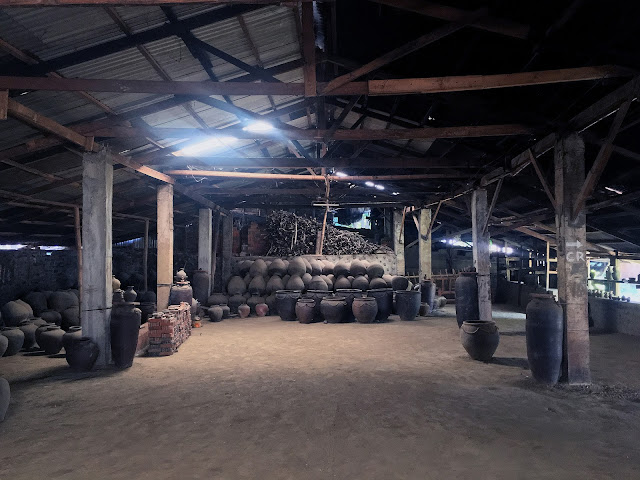
Courtesy of Brad Peadon, Australia

Friday, September 25, 2009

Damonyo


MABOSONG SINDANG NAGRARATAK sa mga konstituwenteng pinabayaan nindang dai nag-aaram huli ta pinag-imotan ninda nin impormasyon. Mabosong sindang nagpapaabaw-abaw sa paagi nin bilyon-bilyon na kuwarta mantang an mga tawo nagtitios. Mabosong sindang magagayon an mga harong mantang an mga tawo inaabisuhan na bayaan na an saindang mga erokán huli suboot ta malalantop nin tubig an banwaan. Mabosong sindang masisiram an pagkakan huli sa panaóng suhol mantang an mga tawo naghahandal na mawaran kan mga badang na saindang pinagkukuahan kabuhayan asin pagkakan. Mabosong sindang daing pakimàno—nagbubungog-bungugan, nagbubuta-butáhan—minsan an banwaan ribong na kun siisay an kakapútan sa tahaw nin kawaran nin pagláom. Mabosong sindang nanlalansi asin nandadaya nin kapwa minsan an mga tawo makosog an pagtubod na matatabangan sindang makahàwas sa pagtios asin kawàran. Mabosong sinda.

1.9-bilyon piso an pinapabulos sa dam na tinutugdok ngunyan sa pag-ultanan kan Lupi asin Sipocot. Sarong dam na para sa irigasyon sa sarong lugar na pirming linalantop nin tubig pag makusog an uran. Sabi ni Tomasito Monzon kan BRBWMP, “blessing in disguise” daa an dam para sa mga tawo. Kun sa Lupi daw siya naka-istar, “blessing in disguise” daw ini? Alagad sabi ngani ni Tomasito, “blessing in disguise” an dam, asin kita makakakontra, huli ta kagalang-galang si Tomasito. Blessing sa Lupi an malantop an haros 70 sagkod 80% kan Poblacion, asin malantop man an pirang barangay. Blessing man ini sa Sipocot huli ta lalantupan man an pirang barangay duman. Dai kita makakakontra kayan.

Sosog sa bareta pirang bulan na nakakaagi, regalo ini ni Gloria sa saiyang aking si Dato. Regalo man ni Gloria sa mga tagaduman sa apektadong mga lugar an paglumoy kan daga, an pagkapara kan natatadang kapalibutan, pagkawara nin kabuhayan, pagkawara nin mga istaran, asin kadakol pang iba. Regalo man ni Gloria an bagong danaw na mahahaman kan dam, sa irarom kan danaw an mga giromdom, mga eksperiyensiya, asin panghabambuhay na agrangay. Asin huli man ta kasuguan ni Gloria, kaipuhan dali-dalion an dam, pati na an pagpalipat kan mga tawo na garo baga mga idong sinisikâ pahali sa irarom kan lamesang kinakakanan—daing konsultasyon na totoo, daing pakimàno. Alagad magin si Gloria o si Dato kagalang-galang man, dai kita makakakontra kayan.

An sabi kan NIA asin kan iba pang imbuweltong ahensiya, igwa daa nin Environmental Compliance Certificate (ECC) na magtataong go signal sa proyektong dam. Alagad an NIA asin an iba pang mga imbuweltong ahensiya mga kagalang-galang man. Minsan ngani duda an mga tawo kun totoo man nanggad an mga nakalahad sa ECC, huli ta pàno makakakua nin ECC kun mayong ‘social acceptance’ o pag-akò kan mga tawo. Sabi ngani kan saro kong amigo, baka ngaya mga taga-Potot an nagsabing togot sinda. Malà ta sa Lupi nag-aalburuto an mga tawo sa takot na mawàran sinda nin erokán, kun siring bakong ‘socially accepted’ an dam. An sabi pa kan mga ahensiya, tres siyentos na pamilya sana an madadanyaran, alagad kun nasa Lupi sinda, aram nindang labi pang marhay sa tres siyentos an madadanyaran. Kun an kataid mo harong babayaan na kan mga nakaistar huli ta abot sinda kan linderos na aaboton kan paglangkaw kan tubig, dai mo daw babayaan an sadiri mong harong? Dai ka daw mangingirhat sa aabtan kan saimong lokál kun harong mo na saná an nakatindog asin napapalibutan na ini nin tubig? Tama na an paghapot, huli ta sabi ko na ngani, an mga ahensiyang ini mga kagalang-galang man, asin dai kita makakakontra sainda.

Tuninong an mga lokal na opisyal. Sabi ngani kan sarong angel sa Lupi, “e ‘di ilipat ngaya an mga tawo.” Arog na sana kaiyan palan. mayong levels of contestation. Daog pa kadtong mga nagralaban sa American Civil War, itong hili-hilera an baradilan, pag nabadil na si mga nasa enotan, si sunod naman. Dawa sa hiling ko an sarong banwaan dapat ipakipaglaban hanggan sa kahuri-hurihan. Dawa sa hiling ko, sa gabos na panahon kaipuhan panindugan kan mga opisyal an mga tawo, bako sana sa paagi nin kun anu-anong panaó o materyal na bagay. Alagad an opisyal kaipuhan na minatindog para sa tawo sa gabos na panahon huli ta obligasyon moral ninda ini—ibinoto baga sinda kan tawo. Alagad pano man nanggad kun sa ngaran kan mga tawo, pirmado an gabos na papel na nagtotogot sa dam, relokasyon, asin iba pa. Alagad, iyan ngani, magin an mga lokal na opisyal man kagalang-galang, dai ta sinda makokontra.

Enot pa sana ini. Mabosong sana sinda huli ta sinda kagalang-galang.

Monday, September 21, 2009

Naglalangkaw na an Tubig


for my friends in Lupi who are affected by the displacement caused by the construction of a dam project by Gloria and his son Dato


An tubig naglalangkaw! Naglalangkaw an tubig!
Ano an buhay kun an kusá magigin danaw?
Pagpasaluib kan kuta sa banwâ sadiring kasarig!

Ay! Hilnga baya ta paabot na an pagtakig
asin ngirhat kan banwaan na malataw
huli ta naglalangkaw na! Naglalangkaw an tubig!

May agrangay an banwaan na linulupig
ta iniirarom na sa tubig, garo sana karaw
an pagpasaluib kan kuta sa banwâ sadiring kasarig!

Hain an pagmakulog sa dagang ngunyan tinitipig
sa mga sagin-sagin na papel asin asin pag-omaw?
Ta an tubig naglalangkaw! Naglalangkaw an tubig!

Paaram na daw maogmang banwaan na hilig?
Paaram na daw dinakulaan na malaad na tingraw?
Pinasaluiban ka kan kuta sa banwâ sadiring kasarig!

Ay ta dai! Dai matogot an sa daga totoong minasarig!
Sisilawon ta sinda kan kosog kan satong kurahaw!
An tubig naglalangkaw! Naglalangkaw an tubig!

Madya na, mga katood, pûnan an pagribaraw!
Rumpagon an tuyo nindang pagkaraw!
An tubig naglalangkaw! Naglalangkaw na an tubig!
Pagpasaluib kan kuta sa banwâ sadiring kasarig!

Tuesday, September 08, 2009

Ina nin Kabikolan


The Hymn for the Celebration of the Tercentenary of Peñafrancia Devotion

Wednesday, July 08, 2009

Festival


(Vox Bikol, June 15-22)

LAST WEEK, THIS PAPER featured four articles on the Church’s rejection of the secular celebrations, military parade, and other civic activities during the Peñafrancia week. Take note that I used ‘week’ instead of the ecclesiastical term ‘novena’ which is a little more than a week. Even the editorial professed kudos to the Bicol Association of Catholic Schools for releasing a statement calling for the Naga City government to schedule the military parade outside the nine-day observance. Atty. Che Carpio, for his part, considered the effort as a way of ‘demilitarizing’ the ‘supposedly’ religious event, which I think is an overreaction—military parade and Marcos regime, Oakwood mutiny, and Moro insurgency?

I, on the other hand, see this as another way of martial conviction of the Church officials themselves—officials, not the Church herself. This is another episode along the melodramatic series of pursuing its parochial character—kitakita, sindasinda. As if the ‘festival’— or rather, the ‘observance’—is not composed of civic individuals, who, when gathered inside the church precinct, would be called a ‘congregation of the faithful.’

And again, I’d want to go back to a fact: that we are given here a situation where no complacency and remorse is shown by the local Church for having participated in these so-called non-religious activities during the fiesta. Again, I ask: didn’t the Church sanction these matters that it lasted for so long? Or should the local Church apologize for being lethargic when all these brouhahas were thriving in the past? Did the local Church in the past enjoyed it too for the reason that they also had a share of its worldly fruits?

But I doubt if the Church officials will do that. I would bet a tithe.

Ah, the military parade.

BACS should have started its statement with an apology, apology for participating in this non-religious, irrelevant parade for how long. BACS representatives should have started its statement with an apology for occupying special seats up there in the reviewing stand during the parade itself. BACS should apologize for wasting much of the effort and passion and perspiration of the students in practicing formation and flanking and rifle carriage just for this one-day event.

For the essential question is: why only now when the Peñafrancia festival, in all aspects and on singular occasion, have already been deeply set in our cultural consciousness? It has become a festival that wonderfully unites all Bikolanos, ecclesiastically and civilly. Oh, please, we do not need another schism.

We just cannot stay blind to the fact that nobody, including the Church, has the monopoly to the decisions that would affect all of us. Otherwise, the Church will be remain as arrogant as it were during Padre Damaso’s time, when the Church prided around of its erudition, knowledge, and the power scaring people around with misquoted passages form the Holy Bible. During those times, the Church seemed to convey to everyone that it possessed the key to everything, all with shock value. Now, I don’t want that happening to my society and my Church, and I’m saying this albeit my voice being just a small voice in the reverberating voices of prelates and presbyters.

All I want is a Church who looks at everything with a look not of utter judgment because the thing being looked at is out of its league. I wish the act of looking be done with understanding, wisdom, and openness. All I want is a Church who believes that each thing has its own beauty and goodness, yes, including military parades and pageantries.

I wish for these manners, because these are the manners of the God this Church had made known to me.

Thursday, May 21, 2009

Contemplating Catholicity


AFTER ALL THESE YEARS of being a Catholic, I was moved again to reflect on my allegiance to this faith after seeing the live-action version of Dan Brown’s another controversial novel, Angels and Demons. No, it did not make me question or doubt my religion. But it lead me to evaluate how this Church—and I, as its member—makes way in this contemporary world. I admit that Angels and Demons is not a very powerful story (albeit better than The Da Vinci Code); but I also believe that its job of mixing facts and fictive elements were done superbly. It possesses in itself many of the qualities of fiction, and among these is the capacity to lead readers to reflection.

Those who have read the original novel will find some parts are missing in the film version but nevertheless the core story is there. It starts, of course, with Robert Langdon, a Harvard professor of symbology who seems to have the answers to all problems in the story. A formula for all Brown’s stories, Langdon is partnered with the sexy and beautiful Vittoria Vetra, a physicist from the CERN (just Google for the meaning). The story begins with a death of two important individuals: the Pope, and a physicist from CERN who is the brain behind the center’s research on the anti-matter—a thing that would supposedly affect our notion of the story of creation, that would scientifically support the mystery of God creating everything out of nothing.

The resurfacing of the ancient secret society Illuminati as the threat to the Church is key to the story. Three cardinals were murdered serially, with each bearing the marks of the Illuminati. One death would lead to another, as one place of murder would be key to the next. The uncovering of the sequences would be done with Langdon’s expertise in interpreting symbols. All these were juxtaposed with scenes that in many ways may be propagandizing against the flaws of the Church. At the end, the deceiver is a young priest, the right hand—the Camerlengo—and the murderer of the Pontiff.

In the end, the story seemed to be a promotion of an overread liberation Theology while being short—or the absence in fact—of reading Teillhard de Chardin, who understood and prayed to God present in sub-atomic particles. But, anyway, it was reflective as much as it was entertaining.

In the end too, it brought me back to the long-standing character of a Church that urges us all to seek the truth. And yet in the not so distant past, she had persecuted those who wished to know and present the truth, if the process was not in accordance with the proceeding sanctioned by the Church. And perhaps these happened because the Church failed to listen. And it continues to this day. Pope John Paul II had apologized for it in fact.

In our local Church, this may actually be a call. This is a call not just to counter with pastoral letters and synodal decrees all what others—state, communities, individuals, etc.—had done contrary to her dogmas and teachings. Perhaps, this is a call for the Church authorities themselves to reflect. Perhaps, there has been lack of reflection, or that reflection was done wrong, all throughout these times when the Church was saying, ‘yes, I do reflect.’ Many times we have heard the hierarchy responded with arrogant indifference and prided themselves with their higher degree of Theologizing substantiated with eloquence of the laws of the Church.

Here in Naga, for one, the Church has been calling for the de-commercialization of the 300-year old Peñafrancia devotion; a call so noble and right. And yet, for me, the Church has yet to admit that in many ways she has the greatest participation in the building up of this awful phenomenon; that along history, the Church was among the first to allow these unnecessary non-religious practices to make their way into the supposedly solemn devotion. Thus, perhaps, it may be an utmost need that the Church, within herself, take lead in the renewal that she calls for; not just lambasting whoever and whatever and ending up being misdirected chronic complainers.

Sometime ago, authorities decreed the changes in Church rites in the vernacular language without considering cultural nuances; perhaps, with the conviction that religions are higher than cultures. This is dangerous. We should know how religion, in its desire to subdue our culture, had altered many of the its components—truths—and left us with a culture contrived according to its preferences.

I end this article in the way Angels and Demons ends. I shall remain a Catholic faithful to her laws and character and cognizant of her flaws and mistakes. From here I shall strive to be better.

Friday, May 15, 2009

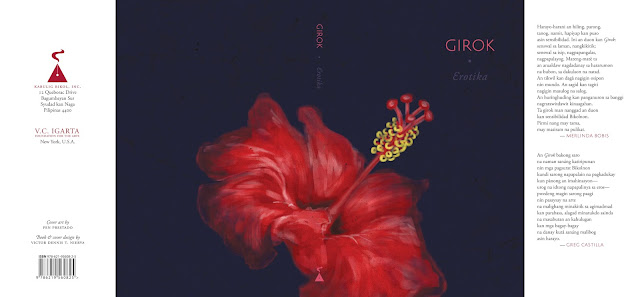
Type[faces]


MY RECENT odysseys devoted to taking pictures of promotional materials of our esteemed trapoliticians have sidetracked me into a conclusion that I would have failed them if they were my students in a course on Typography. Or the other way around: I might have failed to open their minds and enrich their tastes on the looks and disposition of an excellent print design. But hell, no, the latter was just for crying out loud; the former was far more real in essence. This would mean, of course, that they were never serious in whatever they have been promoting, save perhaps for earning a few points on matters of x-factor and the ostentatious exhibiting of their faces and names on tarpaulins to catch public attention replicated by the great number of prints ordered.

As a designer for print, I have always given special attention to typography—the style and appearance of printed matters. At one look, the type gives the impression if the artist has certain sophistication in his or her taste as a designer. A good designer has the special eye for the font styles he or she uses in a particular project. The designer too has the control over the number of styles the project requires. This has something to do with designers who would seem to squeeze all the font styles on a single page so that thereafter the page would look like a circus of types.

For one who wishes to devote oneself to the art of designing for print, typography is an exciting and yet not so easy consideration. For example, I still believe that even if we have been using Times New Roman as the default font style for Microsoft Word for many decades (even until now that it has been replaced with awful Calibri that looks like a try-hard clone of Adobe’s Myriad Pro), or perhaps caused by this very situation itself, Times New Roman remains a much underestimated font style. A few years ago, Ateneo de Naga University’s student paper The Pillars had displayed a masterful use of this type originally founded in 1931 by Stanley Morsel and Victor Lardent for The Times.

But there is no more fulfilling way of discussing typography than employing the examples of our trapoliticians’s campaign materials. Because even if Congressman Luis R. Villafuerte had managed to come up with a quite legible display of his name on those green panels of tin attached to almost every road sign in CamSur’s 2nd district, I would still suggest he stick to the official international road sign font, Helvetica Bold, for the veritable reason of consistency.


On the other hand, his son Lray, has a poorer taste for type styles by using oversized Impact for his graduation greetings. My views on his choices of colors, light orange and blue, are saved for next time. Worse, the critical viewer will surely recognize that Lray kind of jumbled his greeting message because of poor typography. He used an awkwardly expanded Rage Italic, for ‘Happy Graduation!’; then an extremely large Impact for ‘Graduates of 2009’, and a out of place-looking Goudy for the claim: ‘from Gov. Lray Villafuerte’.


Congressman Dato Arroyo, the distinguished-presidential-son-who-was-sent-to-save-Bicol, however, does not have the discerning eye for what could be read from a distance. Dato’s small blue panels, though, attached to warning signs along the roads of the first district of Cam Sur, are of better quality in make and material than those of Congressman Villafuerte. In typography, however, it looks like a post-modern variation of the Snellen scale. One can test his or her visual acuity by staring at one of these panels from a seven-foot distance. Aside from using a very small size of Lucida Calligraphy that barely looked like a yellow streak from a 5-meter distance, Dato’s name was compressed into a narrower Steelfish- or Impact-like type—something that could be used in determining the level of astigmatism because what mattered was not the thickness of the text but the hair-thin distances between letters.


What a waste of public money. What a disgrace to the different foundries that shaped these types into the wonders that they are. For each of these types has an exciting story of its own—from the moment of conception on the flat white paper to the casting of the type on to the metal. Search for the life story of Eric Gill who created Gill Sans, and you’ll know what I mean.

My department chair had already informed me that I will be handling the special course on Desktop Publishing for the first semester. I am pretty excited for this. First part of the course shall be devoted to Typography—something that has not been studied thoroughly here in Bicol, except by students of fine arts and designs. Perhaps, if our trapoliticians are able to bamboozle us now with posters with shitty typography and celebrity-like masquerading, this can be my simple way of educating people that even these useless signage are of low quality and taste; and that even with these ‘banners of hope,’ they are deceiving us.

This time, we may judge the book by its cover.